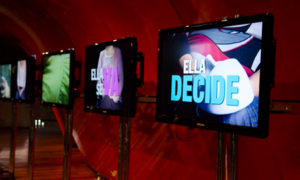
Keen, Dig A Hole, 2020
Curated by Judy Baral
José Drudis-Biada Art Gallery, Santa Monica, CA
The Irish tradition of keening over the body during the funeral procession. The “keen” itself is thought to have been constituted of stock poetic elements (the listing of the genealogy of the deceased, praise for the deceased, emphasis on the woeful condition of those left behind etc.) set to vocal lament. While generally carried out by one or several women, a chorus may have been intoned by all present.
Event during Covid-19. For more information: https://www.msmu.edu/events/keen/
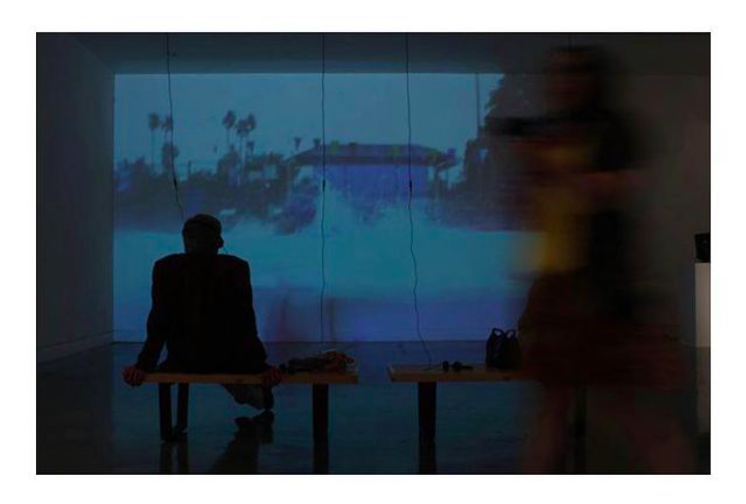
Dig A Hole, 2011, is a public performance intervention self-recorded by the artist in an under-construction environment where a swimming pool was being built. In a freezing and rainy day in Madrid the artist appears in a male-dominated working environment where she got the employees to help her dig a useless, deep hole for two hours.
Opening the heavy door serves as a metaphor for a woman's effort to integrate into a man's world.
Dig A Hole is currently projected at Keen, a group art exhibition curated by Jody Baral, Chair of the Art Department and Director of The José Drudis-Biada Art Gallery, at the Mount Saint Mary’s University in Los Angeles. This is a virtual art show in good company of artists Cristian Costache & Irina Costache, Stuart I. Frolick, due to Covid-19.
Search MSMU
Loneliness A New Beginning is featured at Artists, Advocates, Dreamers
A mixed-media exhibit, curated by Sofia Guiterrez.
José Drudis-Biada Art Gallery, Mount Saint Mary’s University
California, since its conception as a state in 1850 has been a mecca for freethinkers and pioneers. Prior to that it was Mexican and Indigenous; a land of mestizos “mixed race” peoples who negotiated identity between many worlds. California at the edge of the United States continues to maneuver this ever-changing world of migration and the elusiveness of the American Dream. In “Artist, Advocates, Dreamers” artist as free- thinkers bring the complexity of migration and identity to our attention through their advocacy and art.
‘Exposing Migration: The Spirit of the American Dream’
New photography exhibit spotlights migrant journey at the U.S.-Mexico border
Photojournalist Tish Lampert has spent her career documenting human rights battles across the globe. Her latest body of work examines human rights questions much closer to home. “Exposing Migration: The Spirit of the American Dream” illustrates what it’s like to travel along the U.S.-Mexico border — and elevates the humanity that’s often lost in polarized, politicized discussions about immigration, asylum and security.
The opening reception also marks the public debut of Lampert’s new book, “We Protest: Fighting For What We Believe In,” which will be published March 5 by Rizzoli. The book captures the recent wave of social and civic activism that’s washed across America and profiles everyday activists fighting for social justice.
Putting a human face on migration
Nearly a decade in the making, Lampert’s photography exhibit includes images of barriers along our sun-scorched southern border — walls, fences, steel and razor wire — contrasted with intimate depictions of families striving to navigate the divide. The pairing is intentional.
“It feels like we most often look at the story of migration from a detention perspective here in the U.S.,” she says. “We’re not often looking at this story as a journey. We’re avoiding the moments and flashpoints that would bring us into the story. Taking that angle inspires a more human reaction and an ability to relate — maybe even a desire to help.”
Most of the images selected for the show focus on individual faces, especially those of Central American refugees forced to wait on the Mexican side of the border as they apply for asylum to the United States. In one photograph, children in a temporary Tijuana shelter practice writing letters thanks to a classroom on wheels. In another, separated sisters hug during a three-minute visit at the border’s now-closed “Door of Hope.” And in another, volunteers carry small, wooden crosses to the Holtville, Calif., cemetery where hundreds of unknown migrants are buried — migrants who died on their journey northward.
That women and children feature prominently in Lampert’s exhibit shouldn’t be surprising considering they've been a focal point of her globe-spanning work with organizations like the Conflict Awareness Project, Doctors Without Borders and The Africa Project, as well as California-based nonprofits Gente Unida and the Creative Visions Foundation. She also spent five years as media director and photographer for the United Nations’ Voices of African Mothers program.
Lampert’s exhibit has found an appropriate venue at Mount Saint Mary’s University, L.A.’s only women’s university. Eighty-three percent of the University’s undergraduate population are women of color, the majority of whom are Latinas and first-generation college students. Many know the migrant journey very well from family members’ experiences — or their own.
“It’s an honor to present this exhibit at a university where immigrants’ rights and contributions are so celebrated,” Lampert says. She says she’s intrigued to see how students and others respond to her images. For her part, Lampert says her time on the border has left her more hopeful.
“Because I’ve seen all these determined, hopeful faces,” she says. “I’ve met and worked with activists, lawyers and refugees. They inspire me. The world can exhaust you but people can give you reason to believe, too. Artists need to capture that. If art can convey the triumph of the human spirit right now, we’ve done our job.”
‘Artists, Advocates, Dreamers’
To that end, a concurrent exhibit in the gallery will respond to Lampert’s work, offering additional entry points to the migration story. “Artists, Advocates, Dreamers” features 22 artists working in a variety of mediums. The artists come from a broad range of backgrounds — from Central America to the Middle East to Eastern Europe — to illuminate the complexity of identity and migration. Like Lampert, each participating artist has a history of social justice advocacy that inspires and informs their art.
Both shows are curated by Sofia Gutiérrez '92, a Mount Saint Mary’s alumna. A longtime art educator at museums across Southern California, Gutiérrez is now the associate director of education and community engagement at the UCI Institute and Museum of California Art. In 2018, she curated the acclaimed 60-artist exhibit, “The Art of Protest: Epiphany and the Culture of Empowerment,” which also showcased Lampert’s work.
“Exposing Migration: The Spirit of the American Dream” photography exhibit. Featured artist: Tish Lampert.
“Artists, Advocates, Dreamers” mixed-media exhibit. Artists include Alicia Sterling Beach, Carolyn Castaño, Khodr Cherri, Nicole Cohen, Ismel de Anda III, Eszter Delgado, Isaias Delgado, Gustavo Alberto García Vaca, Mario Gutierrez, Jose Luis Hernandez, Ann Higgins, John Ildefonzo, Beatriz Jaramillo, Kristy Kang, John C. Lewis, Stephen Linsley, Veronica Preciado, Amy Putman, Ricardo Reyes, Bruce Richards, Victor Solis, Marianne Sadowski, Albert Valdez, Beatriz Valls, Arturo Vizcaino Cortes, Brenda Zozaya.
Image of the installation at the art exhibition Remixing Realities curated by Sofia Gutierrez at Gallery Avenue 50 in Los Angeles, 2019
Remixing Reality
Curated by Sofia Gutierrez
Gallery Avenue 50, Los Angeles, CA
Loneliness a New Beginning is exhibited as a short film about the feeling of loneliness and isolation of the locals of Los Angeles.
How do we relate to each other?
How do connect with others as citizens of the same city, and the world?
Do you talk about loneliness? Have you ever felt lonely?
Why?
English and Spanish speaking individuals of Los Angeles participate to share their experiences about these issues.
Women of Light and Shadow, artists in discussion.
Curated by Marianne Sadowsky
Disconnected
Avenue 50, Los Angeles, 2014
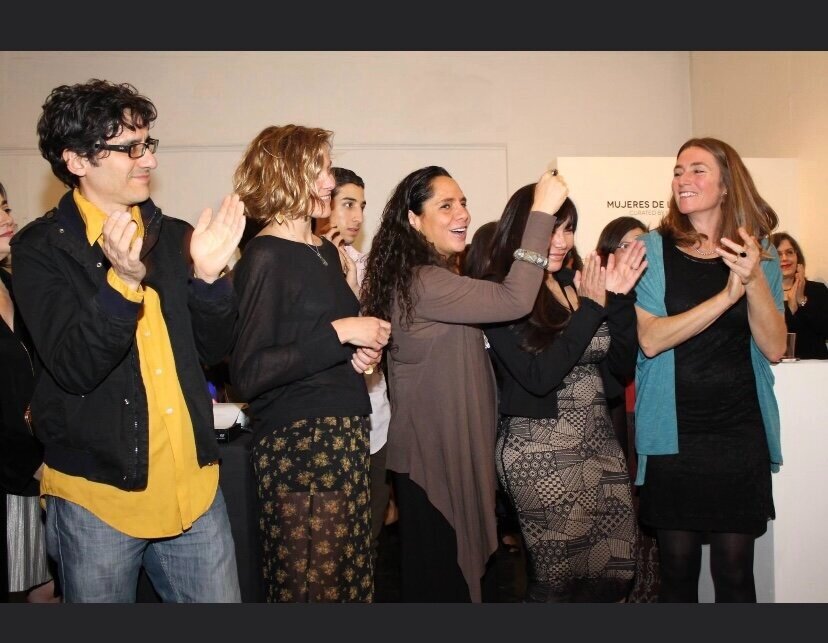
A group exhibition of women celebrating the different languages of Latinas living in Los Angeles. Disconnected is an interactive multimedia installation born as a consequence of the concept of loneliness that the artist have been working on since 2010 in the bast bilingual metropolis of Los Angeles. By this interactive installation, the artist challenges human and social unconscious behaviors, debate the concept of cultural integration, explores the process of self-transformation, and questions public opinion by vividly experiencing Disconnected with the gallery visitor’s phone at the art space.
LA Woman, Yesterday, Today & Tomorrow
Curated by Joan Adam
Forest Lawn Museum, Glendale, CA
Alterations, 2013.
Suzanne Lacy recreated her artwork Alterations, 1994, co-created with Susanne Cockrell and Britta Kathmeyer.
Multimedia installation installed and produced by Beatriz Valls.
Alterations was a performance/installation created for the group exhibition Old Glory, New Story: Re-flagging the 21st Century at Capp Street Projects in San Francisco. In this exhibition, artists, architects and designers from across the country presented assemblage, painting, photography, and mixed media works that featured new flags and symbols for the United States as it prepared to enter the new century. Lacy, Cockrell and Kathmeyer created this ironic work, an installation populated on a daily basis by live women who sat amidst huge red, white and blue piles of used clothes. Hand-stitching the garments together into long red, white and blue lines that trailed around the gallery floor, the women quietly focused on their seemingly endless task. While evoking patriotic icons as emblematic of women as Betsy Ross, these women referred instead to the migrants to this city, particularly those in the garment industry. The gallery, located in the middle of San Francisco’s garment district, was the site for speculation on the role of race and class in the production of clothes in the United States, in women’s work, and in pseudo-patriotism that benefits from cheap labor while decrying immigration.
Capp Street Projects, San Francisco; subsequently installed at the Santa Monica Museum of Art, Santa Monica, and Forest Lawn Museum, Los Angeles, California.
I've had it up to here
Loneliness A New Beginning
Pete and Susan Barrett Gallery, 2012.
I've had it up to here is a group exhibition of socially engaged artists using a broad diverse of mediums and subject matters. Loneliness A New Beginning brings a unique perspective of Los Angeles, in which local bilingual individuals living in Los Angeles bring their perspectives about the feeling of loneliness in this emblematic city known for its isolation, and its division between the Spanish speaking social groups and the English speaking ones. The artist swims in a local pool in an unusual day in LA, and interviews these inspiring people in a guided conversation, while they are reflecting upon their process to overcome this silent and neglected feeling. Participants are raising awareness and empowering themselves and to others who listen to them.
Book presentation of
La Magia del Planner Book by Author Ph.D. Anton Alvarez Ruiz
Screening Loneliness.
FNAC Gallery, Madrid, 2012
Experts in the field of communication and advertising discuss the presentation of the book and the video Loneliness by Beatriz Valls. Invited guests: Hipolito Vivar, Ph.D. Communication and New Media, Universidad Complutense de Madrid. Miguel Angel Furones, CEO of Publicis Group, Spain. Gem Romero, CEO of APG-Spain, Strategy Creative Director of Bassat- Ogilvy. David Torrejon, Director of Professional Relations (“Anuncios”), member of the Academy of Advertising of Spain,
Prostitution Notes, 2011
Performance for Suzannne Lacy’s artwork
Please click to watch the presentation of the event with Suzanne Lacy, curated by Hans Ulrich Obrist
Serpentine Gallery, London, UK, 2011
Please visit: Serpentinegallery.org
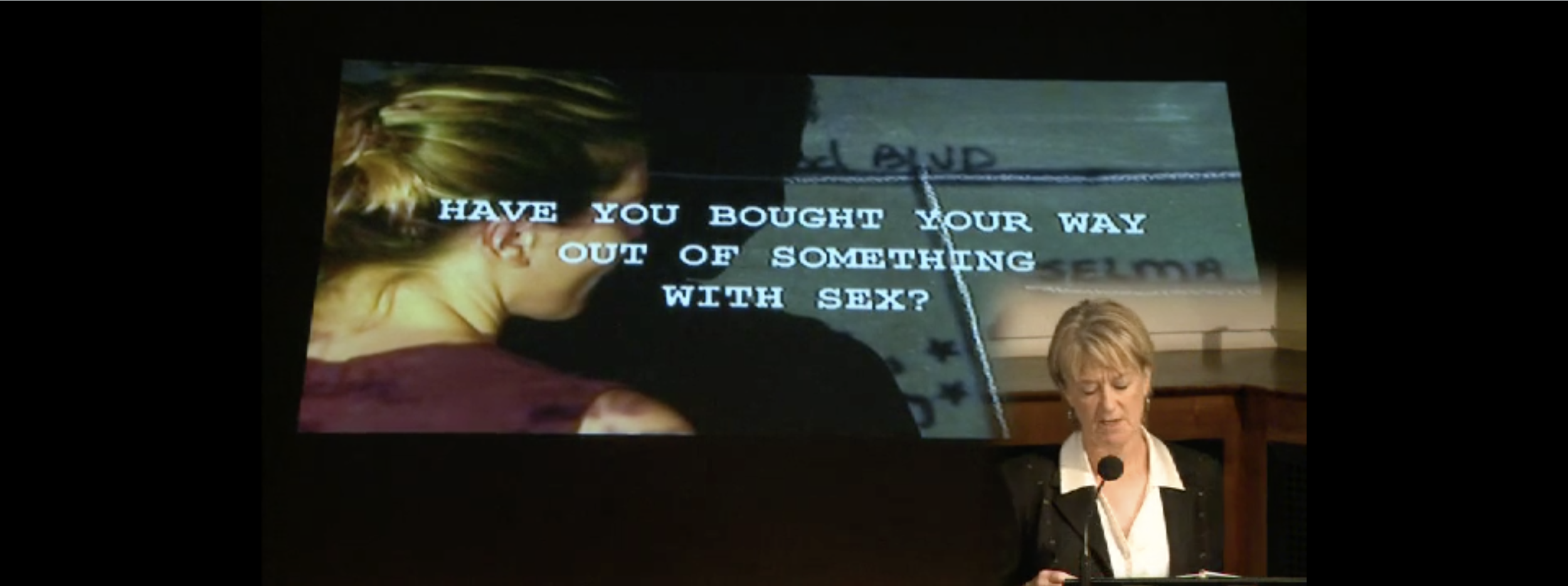
Domestic violence was the theme of this year-long project in Madrid, to critically examine how media and official political discourse construct narratives of gender violence, and the effectiveness of these narratives in the public domain. Lacy worked with collaborators in government, non-profit organizations and the arts to explore gaps between the experience of women who have survived abuse and society’s laws and practices. The project began with a white mask that protestors in Spain have used to symbolize how victims of domestic violence must remain hidden for fear of retribution. The project embraced the complexities of this symbol, which also provoked feelings of entrapment and helplessness for abused women. Four hundred personal narratives from women around the country were recorded by hand onto the face of the white masks that were used throughout the project. Tattooed Skeleton consisted of a series of performances and strategic civic interventions: videotaped interviews with women living in a shelter; a film screening during an annual award ceremony for service providers produced by the Spanish government; a conversation between activists, journalists, and government officials to explore new narratives; an art exhibit in the Reina Sofia Museum; a live-streamed performance event with school-age youth; and a massive protest on November 25th, the International Day for the Elimination of Violence Against Women, where the names of women who were killed during the past year were read. Taken together, these numerous acts/interventions over the span of four months explored existing conventions across the spectrum that “stories” domestic violence in Spain, and offered new ways of thinking about the issue.
Produced by Berta Sichel, Film by Cecilia Barriga, and collaborators Toxic Lesbian
Produced for the Museo Reina Sofia, and supported by the Delegación del Gobierno para la Violencia de Género, Ministerio de Sanidad, Politica Social e Igualdad, Antimuseo de Arte Contemporaneo, and the United States Embassy, Madrid, Spain.
Please click for more information:
TRANS SIMBIOTICA
We transcend together.
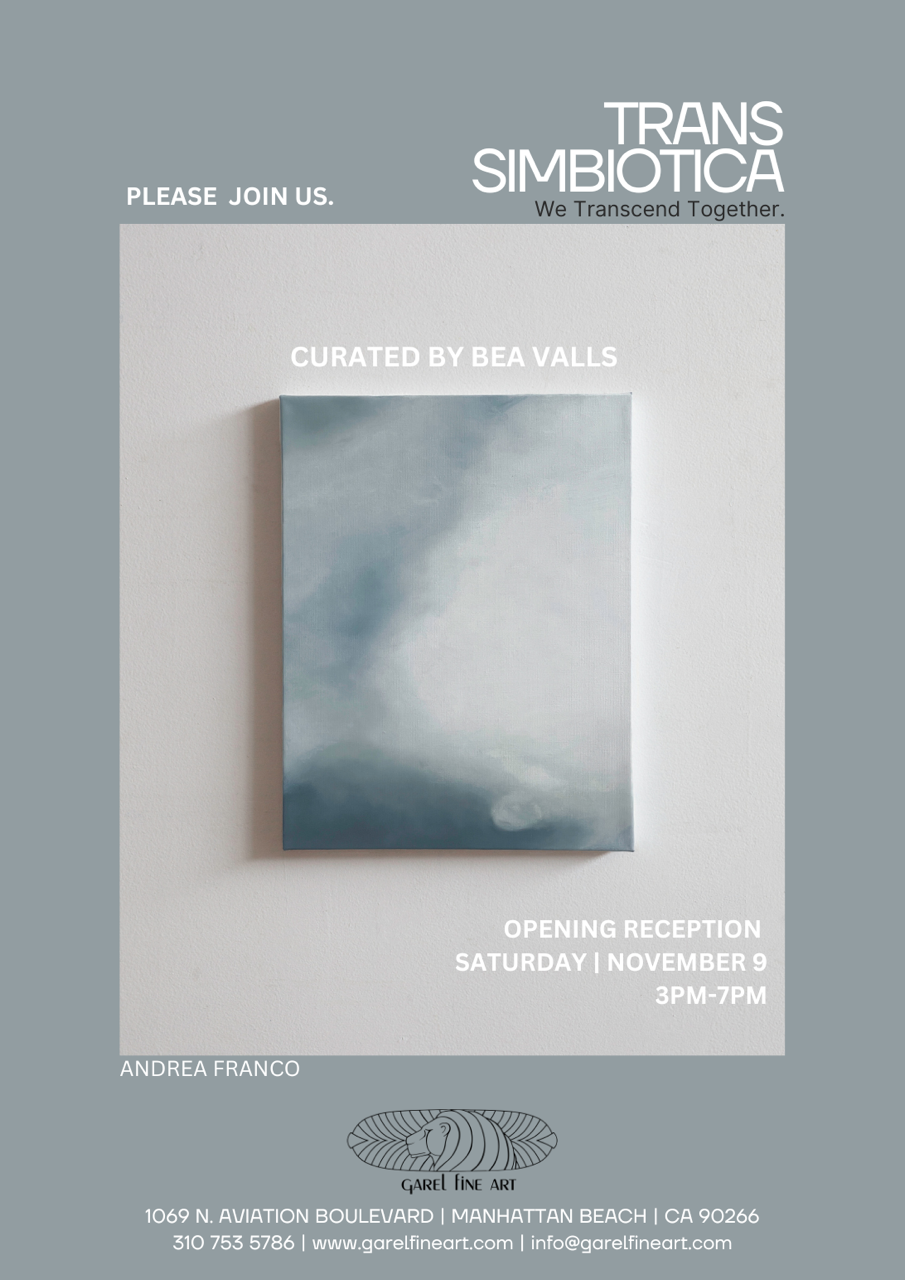
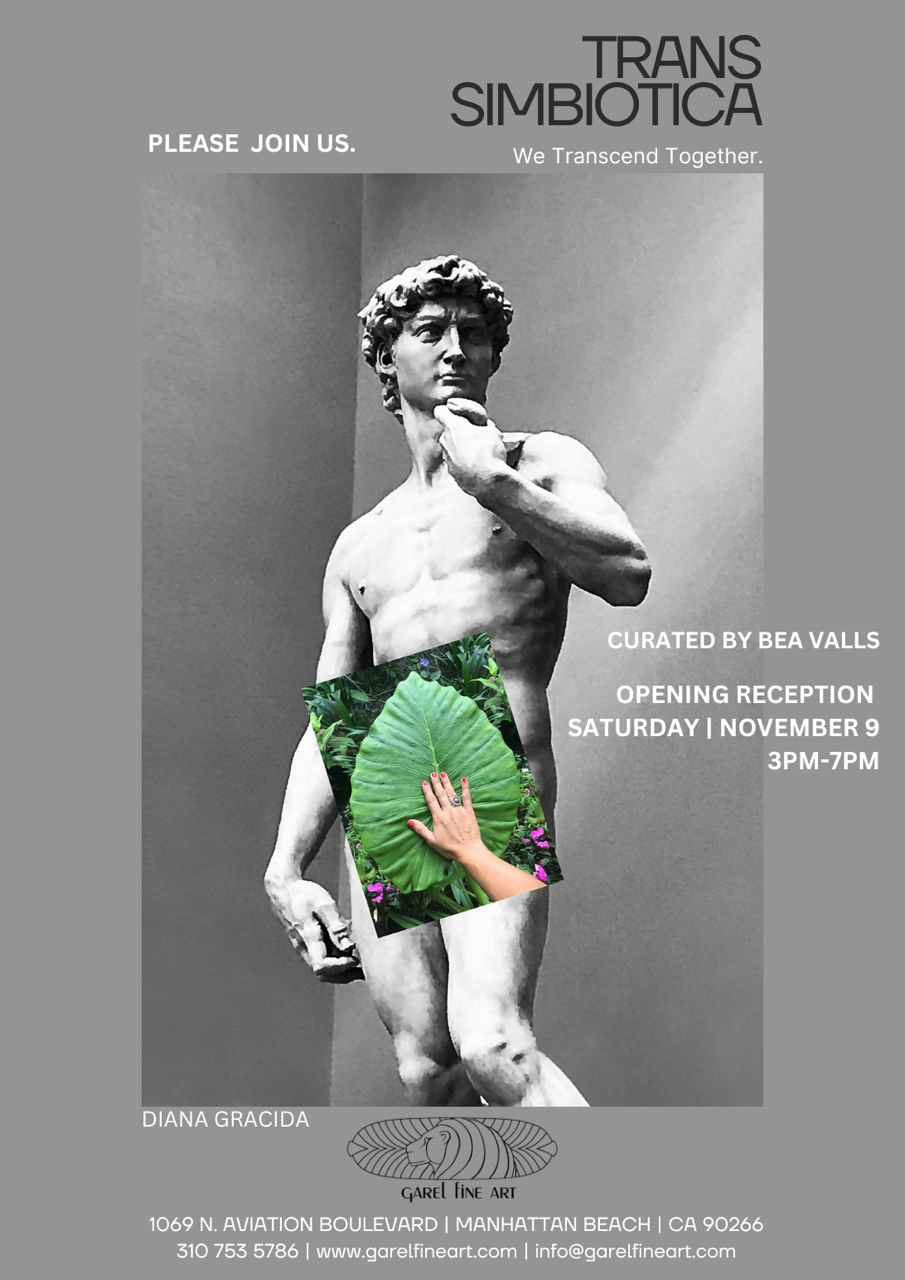
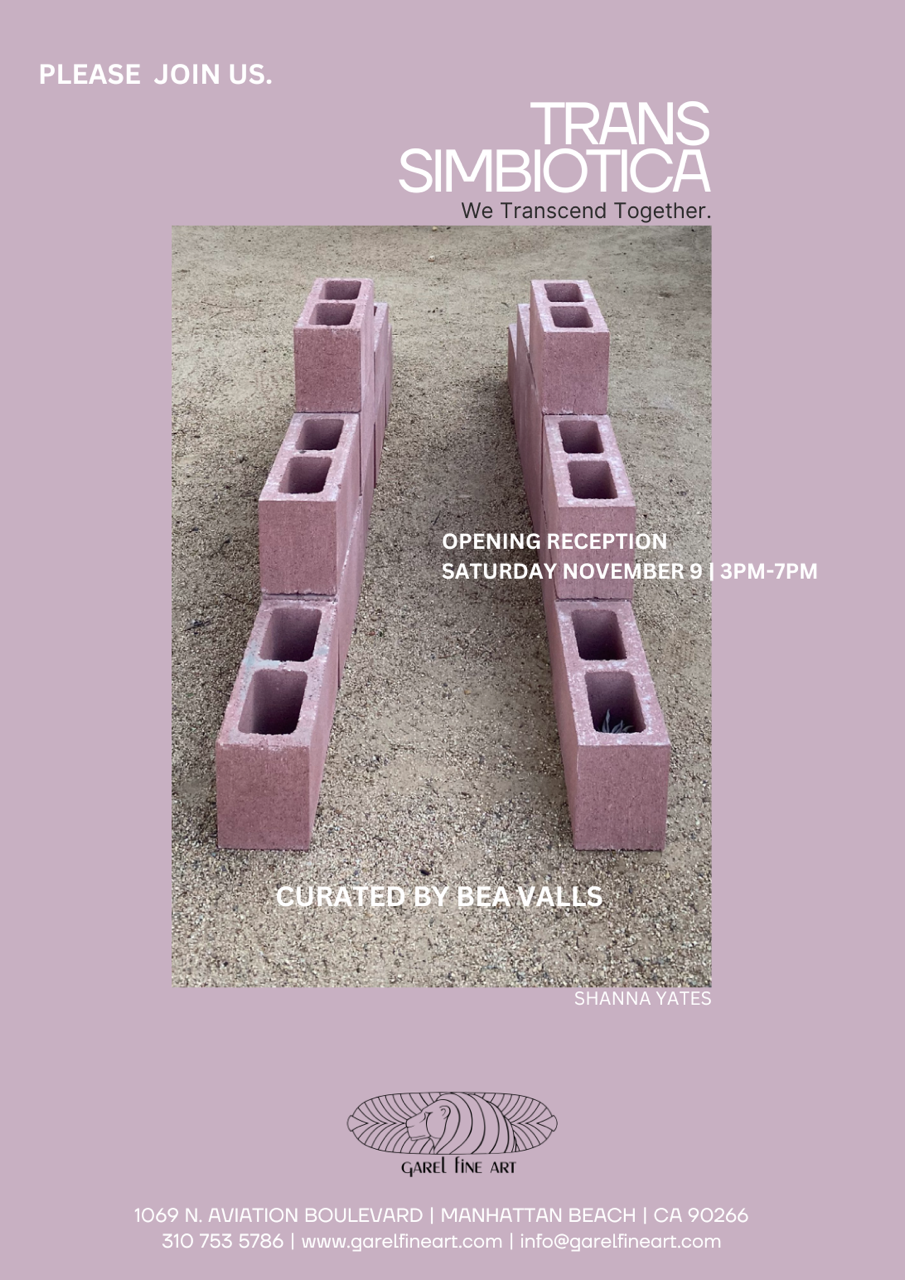
Garel Fine Arts and Beatriz Valls is pleased to announce TRANS SIMBIOTICA, a group exhibition featuring artists Andrea Franco, Diana Gracida and Shanna Yates.
November 9 - 30, 2024
The act of transforming involves changing from one form, state or condition to another. It reflects a shift in perception, in identity, or understanding, where materials, concepts or beings transcend into something new; where change is a fundamental part of existence. Symbiosis highlights the interconnectedness and interdependence in the organic world, showcasing how all life adapts and evolves in relation to one another.
All life cycles are connected, we transcend together.
Presented by Garel Fine Arts and curated by Beatriz Valls, the artists in this exhibition TRANS SIMBIOTICA reveal the potential of transformation by asking the viewer to participate in the question of how to see the unstoppable change that we all Belong to. A painting is the result of another way of seeing; a dress is a place from where to see an other; an other is revealed in the layering of time and space. Otherness, it turns out, is the collective subject; a color in an ocean, a leaf in a tear, a softness in the soil.
Diana Gracida, Andrea Franco, and Shanna Yates employ scale as a mechanism to access the unseen other and reveal the hidden layers of reality. Yates discovers the aerie structures of soilness, Franco explores the abstracted landscapes of water, and Gracida invokes the vegetated emotions of human forms. Each piece becomes a lens, amplifying aspects of the world that inspire curiosity and wonder about the subtle connections shaping our internal and external environments.
In the ritualistic aspect of the question ¿how to see?, the work produced is not merely an aesthetic endeavor but one that functions to modify and elevate consciousness. Transcendence lies within the very act of making the work.